
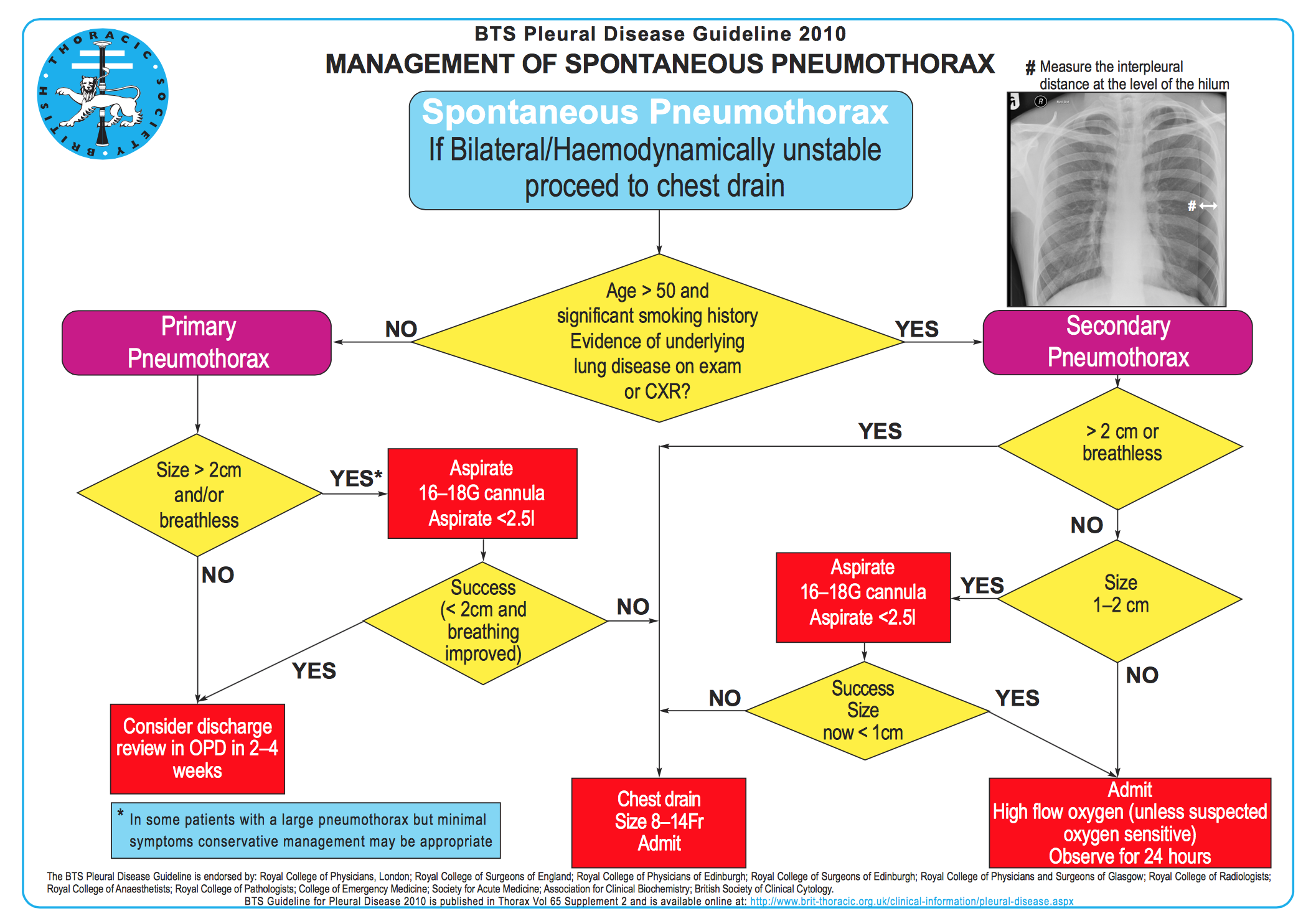
Spontaneous pneumothorax March 2018 | by EMauthor Patients with pre-existing lung disease tolerate a pneumothorax less well, and the distinction between primary and secondary pneumothorax should be made at the time of diagnosis to guide appropriate management. Breathlessness indicates the need for active intervention regardless of the size, as well as supportive treatment (including oxygen). The size of the pneumothorax determines the rate of resolution and is a relative indication for active intervention.
Discharge advice following a spontaneous pneumothorax Patients with primary pneumothorax who are managed conservatively or have a successful aspiration can be discharged from the ED. Follow-up should be arranged with a respiratory physician. Patients should be given the following discharge advice: •Repeat CXR at 2–4 weeks. •Air travel is not possible until a CXR has confirmed resolution (airlines have previously arbitrarily stated a 6-week interval between having a pneumothorax and flying but this has since been amended to 1 week after full resolution). •Diving should be permanently avoided. •Advice to stop smoking (cessation reduces the risk of recurrence). •Resume work and normal activities once all symptoms have resolved. •Return immediately to the ED if symptoms recur |
Links •HOME |
Created with the Personal Edition of HelpNDoc: Easily create PDF Help documents